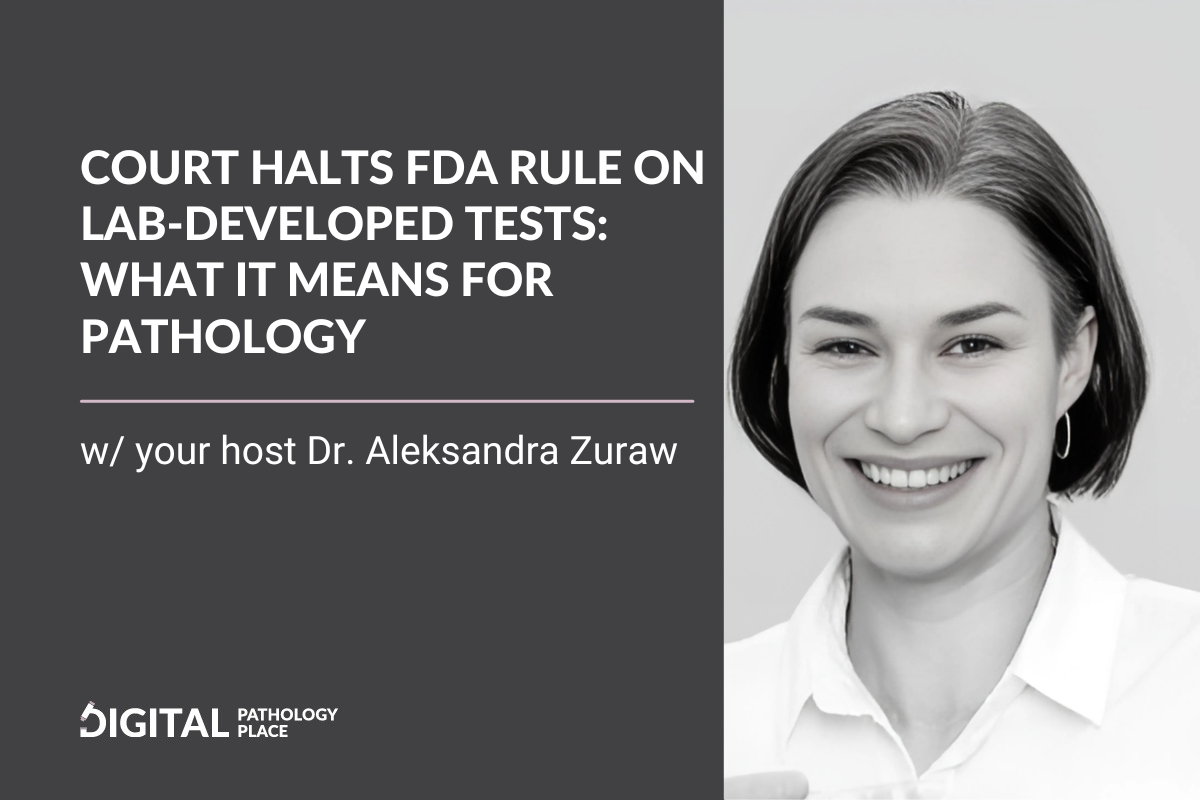
Aleks: On Monday, March 31st and the Eastern District of Texas delivered at sweeping win for labs, Judge Jordan ruled the FDA overstepped its authority because LDTs are services not devices.
So the FDCA’s texts mention words like machine and contraband. These refer to physical products, and LDTs are professional services that are already regulated under CLIA [00:05:00], and Congress drew the line already in 1988 with CLIA 1988 amendments. They created a separate framework for labs, and if Congress wanted FDA involved, it would’ve said so.
Also, the enforcement discretion isn’t a fix, and the court called the FDA’s reliance on non-binding policies a house of cards that failed to address the rules, catastrophic costs, and the ruling vacated the final rule, halting the FDA’s oversight. Immediately. So it wasn’t in effect even for a year. It was less than a year ago in May last year.
This whole debacle started, so to say. And what’s the impact of the current state for pathology and specifically digital pathology? For most. Pathologists, it’s a relief. Labs can continue to develop LDTs without FDA hurdles, and those LDTs are critical for rare [00:06:00] diseases. For small volume tests that aren’t profitable for commercial kits, they make it possible to innovate rapidly.
Tailoring tests for new therapies are emerging pathogens faster. We still remember COVID and for digital pathology, the main area affected are the AI based LDTs, so all the algorithms image based, image analysis based algorithm for cancer detection for, pathology support they can keep being used as LDTs and we know that the path or the goal is to have the algorithms that we want to scale that are good enough and can have really massive impact to have them as medical devices, as software, as a medical device.
But there are many that are not there yet, or are in the initial stage of development or more data is needed, but they can already help patients and help pathologists [00:07:00] as a lab-developed test.