AI is moving faster than most healthcare training programs. That creates a real problem: how do we help future professionals use these tools well without turning AI into hype, fear, or confusion?
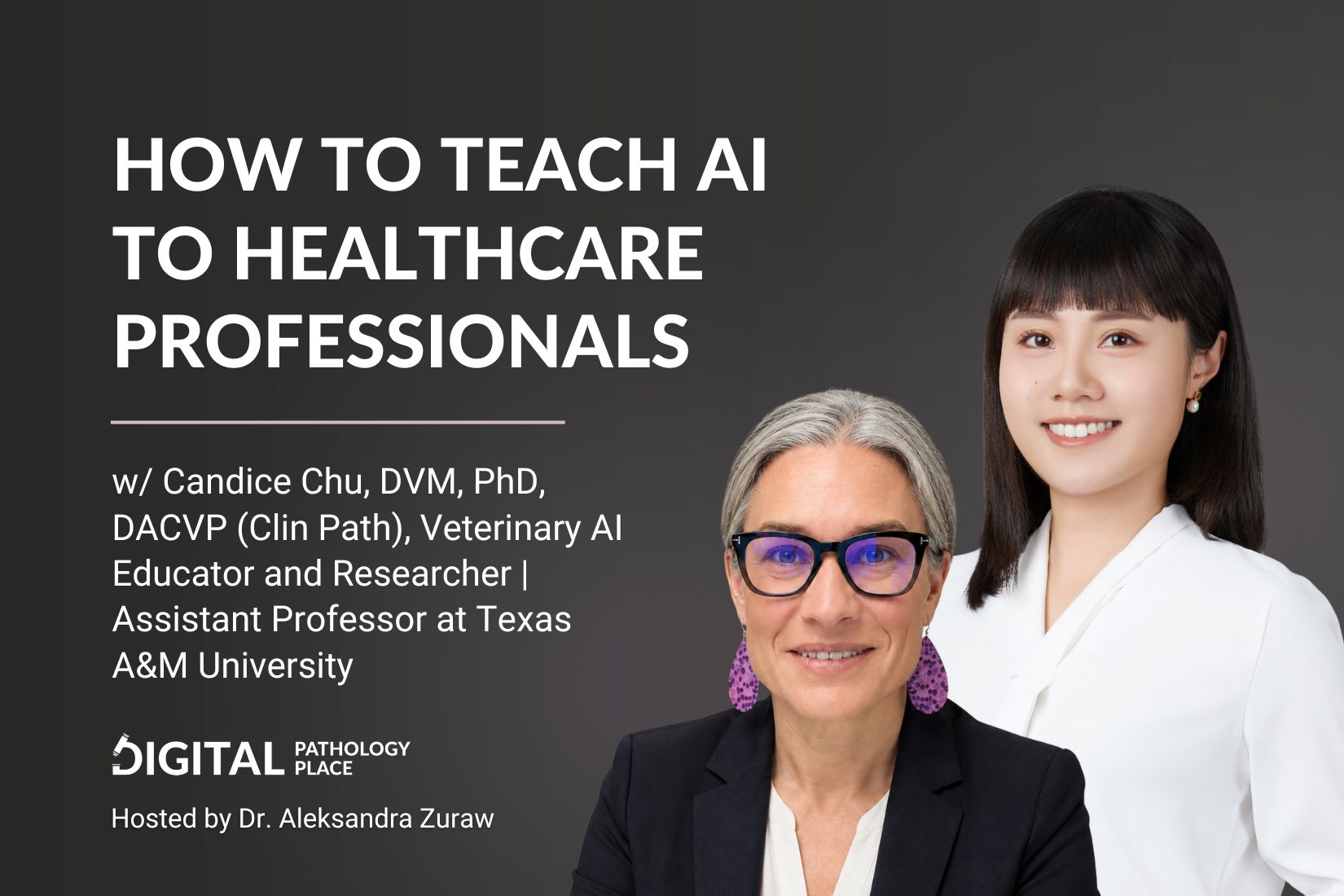
In this episode, I talk with Candice Chu about AI literacy in healthcare and why structured education matters. Candice shares how she built an AI curriculum for veterinary students that covers AI fundamentals, machine learning, image analysis, large language models, prompt engineering, ethics, and final projects built around real tool use.
What I like about this conversation is that it stays practical. This is not about telling people to use every new AI tool. It is about helping learners understand what these tools do, how to evaluate them, when they help, and when they waste time. We also talk about the difference between teaching AI online and building it into formal institutional training, where you have more structure, more resistance, and more long-term impact.
The conversation is centered on veterinary medicine, but the lessons carry over well to digital pathology, computational pathology, and healthcare more broadly. If you are thinking about AI adoption, education, workflow design, or how to prepare students and professionals for real-world use, this episode gives a clear and grounded example.