AI is being applied throughout drug discovery and development. It can review scientific literature, predict protein structures, prioritize molecules, support toxicity assessment, improve clinical trial planning, assist with regulatory documents, and monitor adverse events.
So why haven’t drug approval rates changed significantly?
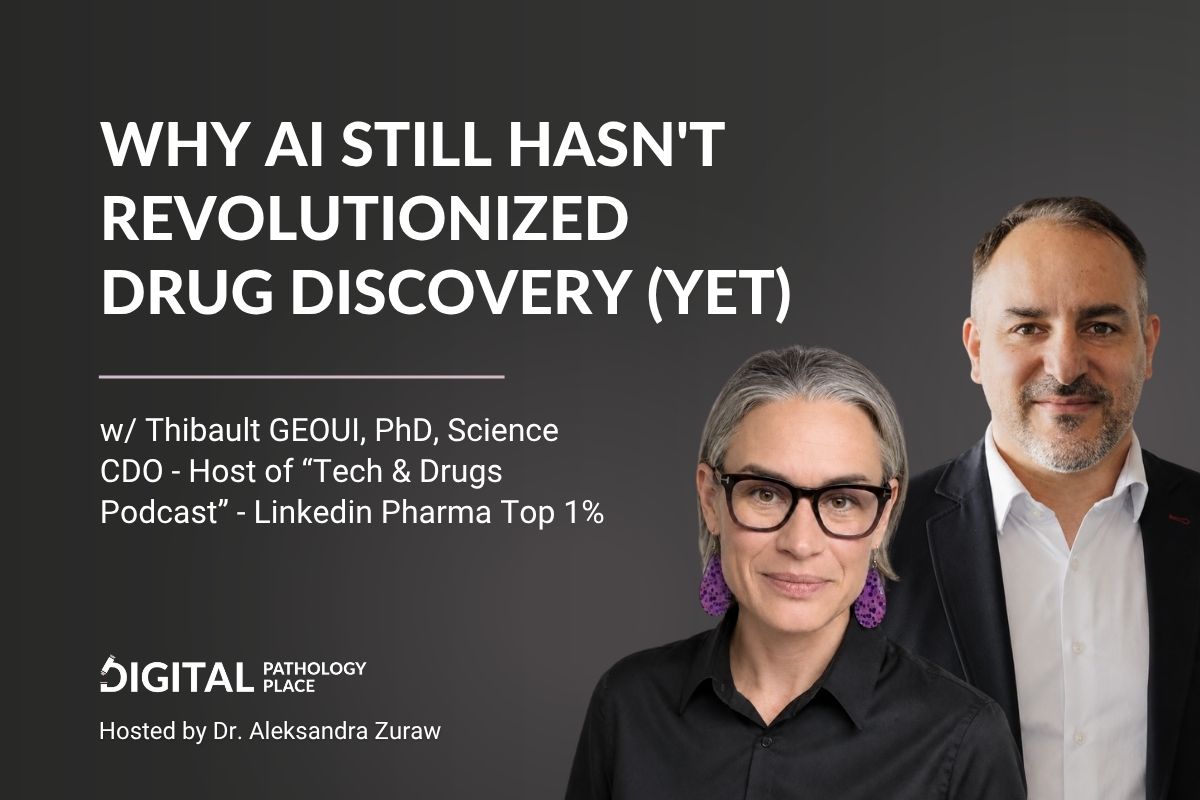
In this episode of the Digital Pathology Podcast, Dr. Aleksandra Zuraw speaks with Thibault Geoui, Science CDO and host of the Tech & Drugs Podcast, about the practical impact of AI across pharmaceutical research and development. They examine where AI creates measurable efficiencies, where expectations may be ahead of the evidence, and why organizational readiness often matters more than access to another tool.
The discussion follows the complete drug development funnel, from basic research and molecule discovery through preclinical studies, clinical trials, regulatory work, commercialization, and pharmacovigilance. It also examines the tech-bio model, in which AI predictions and laboratory experiments operate as a continuous feedback loop.
For digital pathology professionals, the episode connects these broader trends to biomarker development, pharmaceutical pathology workflows, and the Roche–PathAI case discussed by the speakers. The conversation also addresses AI hallucinations, regulatory responsibility, human review, adoption strategy, and the increasing cost of building multi-tool AI workflows.